
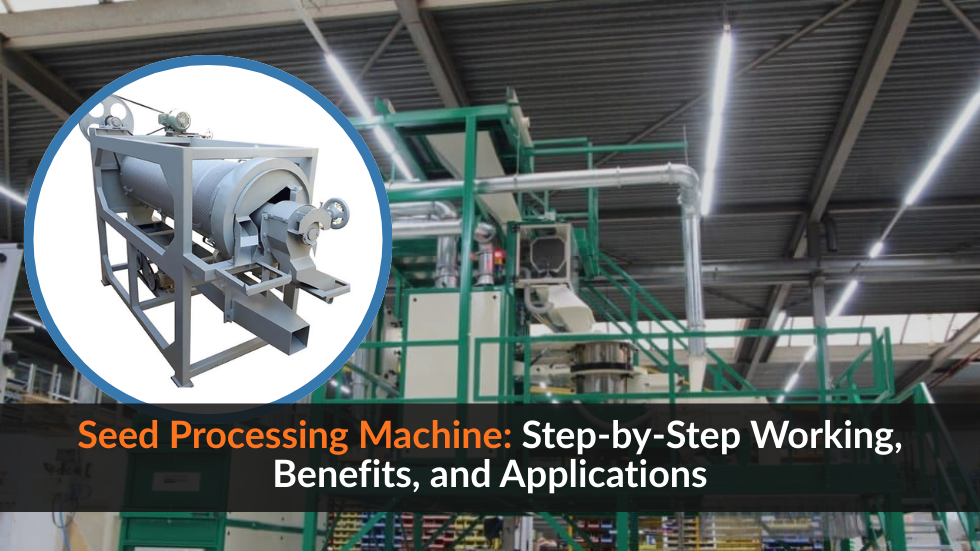
Seed Processing Machine: Step-by-Step Working, Benefits, and Applications
High-quality seeds are the foundation of healthy crops, better productivity, and sustainable farming. However, raw seeds harvested from fields usually contain dust, sticks, stones, immature grains, broken pieces, and moisture. If these impurities are not removed, they can affect germination, storage life, and overall crop performance.
This is where a seed processing machine plays a powerful role.
A modern seed processing machine helps farmers, seed companies, and research labs clean, grade, treat, and prepare seeds for sowing or storage — ensuring purity, uniformity, and superior quality.
In this blog, let’s understand:
- What a seed processing machine is
- Step-by-step working process
- Key benefits
- Major applications across agriculture
What is a Seed Processing Machine?
A seed processing machine is specialized agricultural equipment designed to clean, grade, sort, treat, and prepare seeds before packing and storage. It ensures that only healthy, uniform, contaminant-free seeds are selected for further use.
These machines are widely used in:
- Seed production units
- Agriculture universities and research centers
- Seed testing laboratories
- Commercial farms
- Seed storage facilities
With advanced engineering and precise technology, a seed processing machine improves seed quality while saving time, labor, and cost.
Step-by-Step Working of a Seed Processing Machine
Different seeds require different processing techniques, but the overall workflow generally follows these stages.
1. Feeding and Pre-Cleaning
Freshly harvested seeds are fed into the hopper.
The machine initially separates:
- Dust
- Straw
- Chaff
- Larger debris
- Small broken particles
Air blowers and sieves help remove lightweight impurities in the pre-cleaning stage.
2. Cleaning and Separation
Now the machine removes:
- Stones
- Soil clods
- Metal pieces
- Other heavy foreign materials
Through vibrating screens, aspiration systems, and gravity-based separation, seeds are cleaned thoroughly. Only seeds with appropriate density move ahead.
3. Grading and Sorting
Uniformity is very important in agriculture.
The grading system sorts seeds based on:
- Size
- Shape
- Weight
This ensures even germination, uniform plant growth, and consistent yields.
Some advanced systems also use optical sensors to reject damaged or discolored seeds automatically.
4. Seed Treatment (Optional)
To protect seeds from diseases and pests, many processing units treat seeds with:
- Fungicides
- Insecticides
- Bio-coatings
- Nutrient-based coatings
Seed treatment increases germination success and protects young plants.
5. Moisture Control and Drying
Seeds with excess moisture are at high risk of fungal attacks and spoilage.
The seed processing machine helps ensure proper moisture levels by supporting controlled drying processes. This increases the storage life of seeds.
6. Packing and Storage
Finally, processed seeds are packed in labeled, airtight bags.
They are then stored safely for:
- Distribution
- Research
- Commercial farming
Each stage plays a crucial role in ensuring the final seed quality.
Key Benefits of Using a Seed Processing Machine
✔ Higher Seed Purity
The machine removes unwanted materials, damaged seeds, and contaminants. This ensures better germination and healthier crops.
✔ Improved Productivity
With uniform seeds, farmers experience:
- Better plant growth
- Uniform crop maturity
- Higher yields
✔ Longer Shelf Life
Proper drying and cleaning reduce moisture and microbial growth — increasing storage life.
✔ Reduced Labor and Time
Manual cleaning takes hours and requires multiple workers. A seed processing machine automates the entire process with high accuracy.
✔ Cost-Effective for Seed Businesses
Seed companies and storage units benefit from reduced wastage, faster processing, and consistent quality.
✔ Enhanced Market Value
Clean and graded seeds bring better prices in the market and build brand trust.
Applications of Seed Processing Machines
A seed processing machine is essential across different areas of agriculture.
🌾 Farming and Seed Production
Farmers use processed seeds to improve germination and protect crops from early damage.
🧪 Research & Development
Agriculture institutes, universities, and labs use these machines to test and develop improved seed varieties.
🏭 Commercial Seed Industries
Seed manufacturers rely on seed processing systems to maintain purity standards and meet certification norms.
🏬 Warehouses and Storage Units
Proper moisture-controlled seeds reduce spoilage and financial losses.
From paddy, wheat, maize, and pulses to vegetables and oil seeds — a seed processing machine supports multiple crop categories.
Why Choose Quality Seed Processing Solutions?
When investing in a seed processing system, reliability, precision, and technology matter.
A high-quality seed processing machine ensures:
- Durable build
- User-friendly design
- Less maintenance
- Accurate grading and cleaning
- Long-term productivity
For businesses and farmers looking for dependable agricultural machines, choosing a trusted manufacturer becomes essential.
Final Thoughts
A seed processing machine is more than just equipment — it is an investment in productivity, quality, and future crop success.
By removing impurities, grading seeds accurately, and improving storage life, it ensures that every seed planted has the best chance to grow into a healthy plant.
If you are involved in seed production, storage, or agricultural research, integrating a seed processing system into your workflow can significantly enhance efficiency and profitability.