
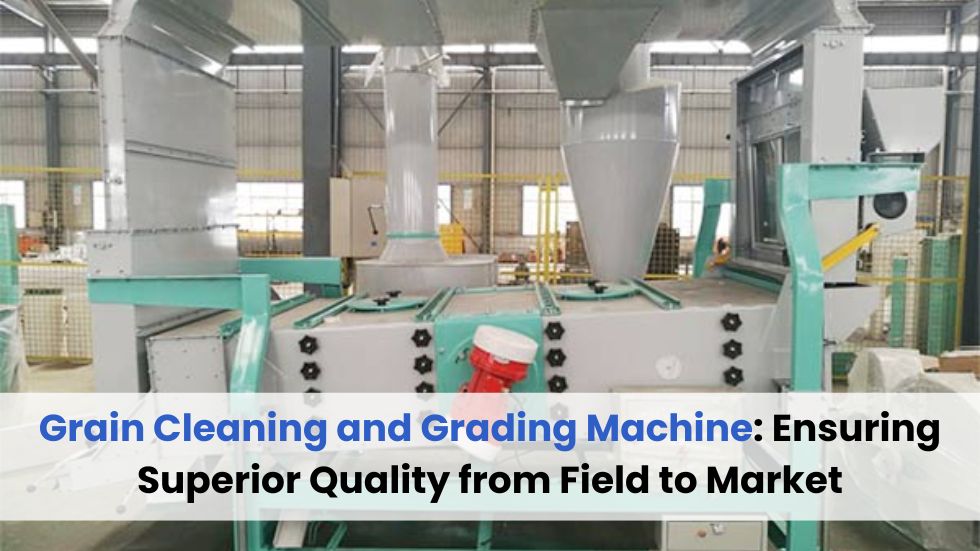
Grain Cleaning and Grading Machine: Ensuring Superior Quality from Field to Market
Introduction
From the moment grains are harvested in the field to the time they reach the consumer, maintaining their purity, appearance, and nutritional value is of utmost importance. Grains like wheat, rice, maize, and pulses often contain impurities such as dust, husk, stones, chaff, and broken kernels when collected directly from the fields. If these impurities are not removed, the grain loses its market value, storage life, and overall quality.
This is where modern Grain Cleaning and Grading Machines come into play. These machines are designed to separate unwanted materials, sort grains according to size and weight, and ensure that only the highest quality product reaches the market.
In today’s agriculture and food industries, using advanced grain cleaning and grading systems is not just a choice—it’s a necessity. In this comprehensive guide, we will explore how these machines work, their types, benefits, and why they are essential for every grain processor aiming to deliver superior quality products.
Understanding Grain Cleaning and Grading
What is Grain Cleaning?
Grain cleaning is the process of removing all unwanted foreign materials from harvested grain. These impurities may include dust, stones, sticks, immature kernels, husk, and even other crop seeds. The purpose of cleaning is to prepare grains for safe storage, processing, and sale.
What is Grain Grading?
Grading is the classification of grains based on physical properties like size, weight, color, and shape. This step ensures uniformity, which is essential for quality control, packaging, and pricing. Graded grains are more appealing to buyers, and they fetch higher market prices.
Together, cleaning and grading are critical for improving grain quality, enhancing storage life, and maintaining consistency from field to market.
The Need for a Grain Cleaning and Grading Machine
Traditional grain cleaning methods involved manual winnowing or hand sieving, which were time-consuming and inconsistent. Modern Grain Cleaning and Grading Machines automate the process, offering faster, more precise, and efficient operations.
Here’s why these machines are indispensable in modern agriculture and grain processing:
- Improved Grain Purity – Removes dust, broken grains, stones, and other impurities.
- Enhanced Productivity – Processes large quantities of grain in a short time.
- Consistent Grading – Ensures uniform grain size and weight for better market presentation.
- Reduced Labor Costs – Automation minimizes manual effort and human error.
- Longer Storage Life – Clean grains resist fungal growth, insect infestation, and moisture damage.
- Higher Market Value – Premium-quality, graded grains fetch better prices.
Working Principle of a Grain Cleaning and Grading Machine
A Grain Cleaning and Grading Machine typically uses a combination of air suction, vibration, and sieving to separate impurities from grains. The process includes several stages designed to ensure thorough cleaning and accurate grading.
1. Feeding System
The grains are fed into the machine through a controlled inlet hopper. A feed roller ensures an even flow, preventing overloading or clogging during processing.
2. Pre-Aspiration (Air Cleaning)
The first step uses air suction to remove light impurities like dust, husk, and chaff. These materials are lighter than the grain and are easily carried away by a controlled airflow.
3. Screening or Sieving
Grains pass over multiple vibrating screens or sieves with specific perforation sizes:
- The top screen removes large impurities such as twigs and stones.
- The middle screen retains the ideal-sized grains.
- The bottom screen eliminates fine dust, sand, and undersized particles.
This multi-screen process ensures precise separation based on size.
4. Grading Section
After cleaning, the grains are sorted into different grades using sieves or specific weight-based mechanisms. This step ensures uniformity, which is essential for packaging and market standards.
5. After-Aspiration
A second air suction system removes any remaining lightweight materials or broken grains that might have passed through the screens.
6. Collection and Discharge
Finally, the cleaned and graded grains are collected through discharge spouts, while waste and impurities are directed to separate outlets for easy disposal.
Key Features of Modern Grain Cleaning and Grading Machines
When investing in a high-quality Grain Cleaning and Grading Machine, it’s essential to understand the key features that define its performance and reliability:
1. Robust Construction
Built with heavy-duty steel frames, modern machines ensure vibration-free and long-lasting performance under continuous operation.
2. Multi-Deck Screens
Multiple screen layers allow separation of various impurities in one go, improving cleaning efficiency and throughput.
3. Adjustable Airflow Control
Machines come with adjustable air suction controls to handle different grain types and impurity levels effectively.
4. Rubber Ball Screen Cleaning
Rubber balls prevent screens from clogging during operation, ensuring smooth and uninterrupted cleaning.
5. Easy Maintenance
Quick-access panels and easily replaceable screens simplify maintenance and reduce downtime.
6. Energy Efficiency
Modern models are designed for lower power consumption, reducing operational costs without compromising performance.
7. Multi-Crop Capability
A single machine can handle various grains such as wheat, rice, maize, barley, pulses, and oilseeds with simple adjustments.
Advantages of Using a Grain Cleaning and Grading Machine
1. Superior Grain Quality
Clean and well-graded grains not only look better but also meet market and export standards. The machine ensures that only high-quality grains move forward to packaging and distribution.
2. Higher Market Value
Traders and buyers pay a premium for uniformly graded and impurity-free grains. Consistency in quality directly translates to increased profitability.
3. Reduced Storage Losses
Clean grains are less susceptible to spoilage, pest attacks, and mold growth. By removing dust and husk, these machines ensure longer storage life and reduced post-harvest losses.
4. Efficient Processing Line
Using a Grain Cleaning and Grading Machine as the first step in processing ensures smoother operation of downstream machines such as destoners, gravity separators, or polishers.
5. Labor and Time Savings
Automation significantly reduces manual work and processing time, increasing productivity for farmers and processors alike.
6. Sustainability
By minimizing waste and improving processing efficiency, these machines contribute to more sustainable agricultural practices.
Applications of Grain Cleaning and Grading Machines
Grain Cleaning and Grading Machines are used across various industries and processing setups:
- Seed processing plants
- Agricultural cooperatives
- Flour mills and rice mills
- Grain storage facilities
- Food and feed manufacturing units
- Export processing centers
They are capable of processing a wide variety of grains, including:
- Wheat
- Paddy
- Maize
- Barley
- Pulses
- Sunflower seeds
- Mustard seeds
- Sorghum and millets
Factors to Consider When Choosing a Grain Cleaning and Grading Machine
Selecting the right equipment can make a huge difference in the quality and efficiency of your processing line. Here are some important factors to consider:
1. Capacity
Choose a machine that matches your daily or hourly grain processing requirements. Machines range from small (2–5 TPH) to large (50+ TPH) capacities.
2. Type of Grain
Ensure the machine can handle multiple types of grains if your operation processes different crops throughout the year.
3. Power Consumption
Look for energy-efficient models to reduce operational costs.
4. Cleaning Efficiency
A good machine should be able to remove up to 95% of impurities for superior output.
5. Ease of Operation
A user-friendly control panel, quick screen change system, and low maintenance requirements make operation simpler and more efficient.
6. After-Sales Service
Always choose a reliable manufacturer who offers technical support, spare parts availability, and maintenance assistance.
Maintenance Tips for Optimal Performance
Proper maintenance ensures long-term performance and consistency of your Grain Cleaning and Grading Machine:
- Clean the screens regularly to avoid clogging.
- Check airflow settings periodically to maintain the right balance for different grains.
- Lubricate bearings and moving parts as per manufacturer guidelines.
- Inspect motors and belts for wear and replace them when necessary.
- Ensure proper waste disposal to maintain a clean working environment.
- Train operators to understand machine functions and troubleshoot basic issues.
Routine inspection and care can significantly extend the life of your equipment while maintaining cleaning precision.
The Role of Grain Cleaning and Grading in Quality Assurance
High-quality grains form the backbone of the food supply chain. Grain cleaning and grading ensure that the product reaching the consumer meets strict quality standards. Clean, uniform grains enhance:
- Milling efficiency
- Nutritional consistency
- Product appearance
- Taste and texture in food processing
Moreover, by removing contaminants and foreign particles early, processors comply with food safety regulations and build consumer trust in their products.
How IndoSawAgri is Revolutionizing Grain Processing
At IndoSawAgri, we specialize in designing and manufacturing world-class agricultural machinery, including Grain Cleaning and Grading Machines that meet the needs of modern processing units.
Our machines are:
- Efficient: Built with high cleaning accuracy and large throughput capacity.
- Durable: Constructed using premium materials for long-lasting performance.
- User-Friendly: Easy to operate, maintain, and adapt to multiple crops.
- Environmentally Responsible: Designed to minimize waste and power consumption.
Whether you are a small-scale farmer or a large industrial grain processor, IndoSawAgri offers customized solutions to ensure your grain quality stands out in the market.
Conclusion
The journey of grain from field to market involves multiple steps, but one of the most crucial is cleaning and grading. The Grain Cleaning and Grading Machine ensures that only pure, uniform, and high-quality grains make it to consumers—enhancing both profitability and reputation for producers and processors.
By adopting advanced technologies from trusted manufacturers like IndoSawAgri, you not only improve operational efficiency but also contribute to better food quality and sustainable agricultural practices.
Investing in a Grain Cleaning and Grading Machine is not just about machinery—it’s about committing to excellence, efficiency, and quality from the field to the marketplace.