
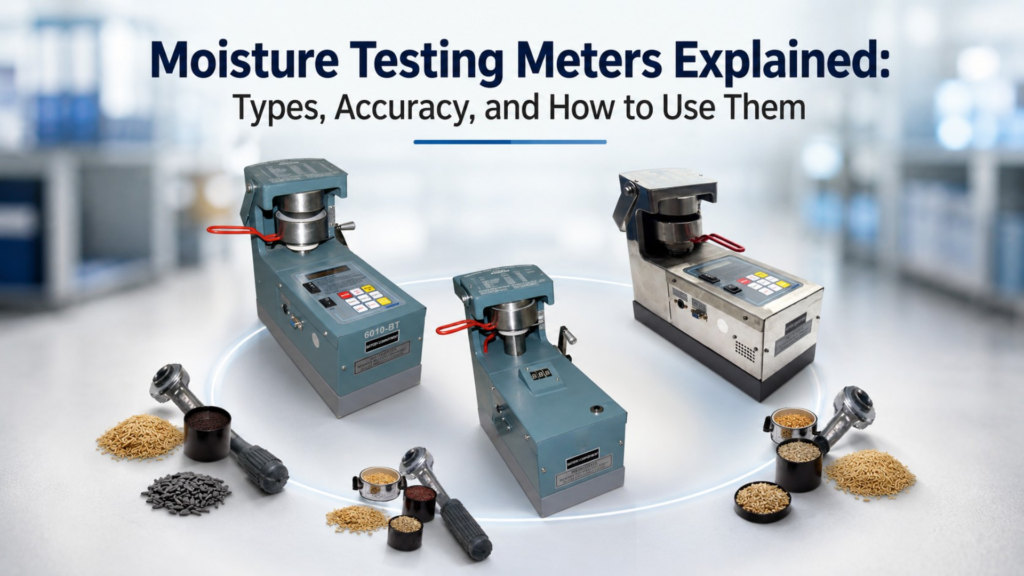
In agriculture, construction, and various industries, controlling moisture levels is critical for quality, safety, and efficiency. This is where Moisture Testing Meters play a vital role. These devices help measure the moisture content in materials like grains, soil, wood, and more, ensuring optimal conditions and preventing losses.
In this blog, we’ll explain the types of Moisture Testing Meters, their accuracy, and how to use them effectively.
What Are Moisture Testing Meters?
Moisture Testing Meters are specialized devices used to determine the amount of water present in a substance. Whether you are a farmer checking grain storage conditions or a professional in construction, these meters help avoid damage caused by excess or insufficient moisture.
Maintaining the right moisture level ensures better crop storage, improved product quality, and reduced risk of spoilage or structural damage.
Types of Moisture Testing Meters
There are several types of Moisture Testing Meters available, each designed for specific applications:
1. Pin-Type Moisture Meters
These meters use two metal pins that are inserted into the material. They measure electrical resistance, which changes with moisture levels.
- Best for: Wood, grains, and building materials
- Pros: Accurate readings
- Cons: Slightly invasive due to pin insertion
2. Pinless Moisture Meters
These meters use electromagnetic sensors to scan the surface without penetrating the material.
- Best for: Finished surfaces and delicate materials
- Pros: Non-destructive and quick
- Cons: Slightly less precise than pin-type in some cases
3. Grain Moisture Meters
Specifically designed for agricultural use, these meters measure moisture in crops like wheat, rice, and maize.
- Best for: Farmers and grain traders
- Pros: Highly accurate for agricultural needs
- Cons: Limited to specific grain types
4. Soil Moisture Meters
These are used to measure moisture levels in soil, helping farmers manage irrigation effectively.
- Best for: Farming and gardening
- Pros: Improves water management
- Cons: May require calibration for different soil types
Accuracy of Moisture Testing Meters
Accuracy is one of the most important factors when choosing Moisture Testing Meters. Several elements influence accuracy:
- Calibration: Regular calibration ensures reliable readings
- Material Type: Different materials require specific meter settings
- Environmental Conditions: Temperature and humidity can affect results
- User Handling: Proper usage improves measurement precision
High-quality Moisture Testing Meters can provide accuracy levels within ±0.5% to ±2%, depending on the model and application.
How to Use Moisture Testing Meters
Using Moisture Testing Meters correctly is essential for accurate results. Follow these steps:
- Select the Right Meter
Choose a meter designed for the material you are testing. - Prepare the Sample
Ensure the material is clean and free from external moisture. - Insert or Scan
- For pin-type: Insert the pins into the material
- For pinless: Place the sensor flat on the surface
- Read the Display
Wait for the reading to stabilize and note the moisture percentage. - Repeat for Accuracy
Take multiple readings from different areas for consistent results.
Why Moisture Testing Matters
Using Moisture Testing Meters helps:
- Prevent crop spoilage
- Maintain product quality
- Reduce financial losses
- Improve storage and handling
- Ensure compliance with industry standards
Conclusion
Moisture Testing Meters are essential tools for anyone dealing with materials sensitive to moisture. By understanding the types, accuracy factors, and proper usage, you can make better decisions and protect your investments.
If you are looking for reliable and high-quality Moisture Testing Meters, explore the wide range of solutions available at https://indosawagri.com/. Visit the website today and choose the perfect moisture testing solution for your needs!