
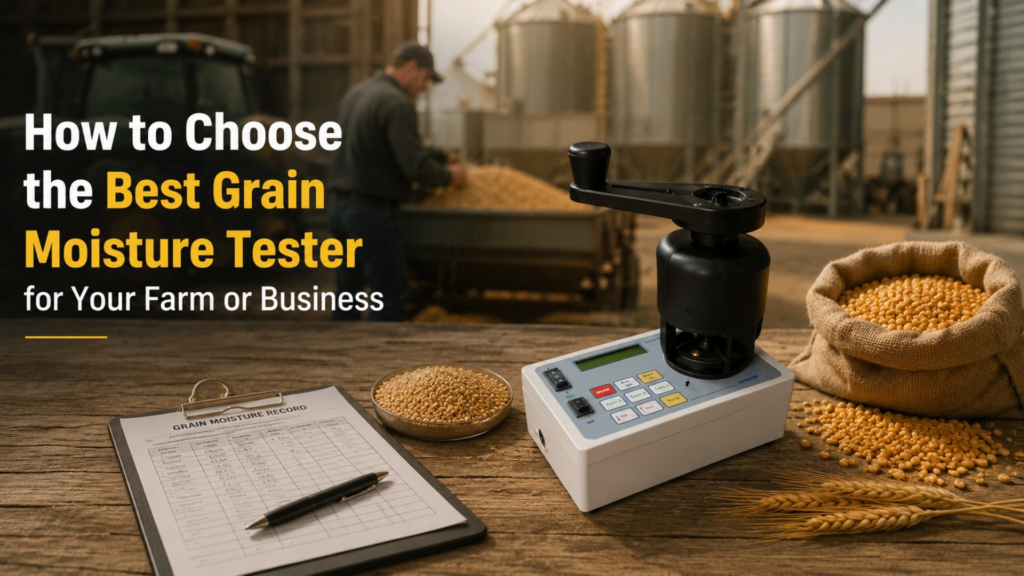
In modern agriculture and grain trading, maintaining the right moisture level is critical for ensuring quality, preventing spoilage, and maximizing profits. Whether you are a farmer, grain merchant, or processor, investing in the Best Grain Moisture Tester can make a significant difference in your operations. But with so many options available, choosing the right one can be challenging. This guide will help you make an informed decision.
Why a Grain Moisture Tester is Essential Best Grain Moisture Tester
Grain moisture directly affects storage life, weight, and market value. Excess moisture can lead to mold growth, fungal contamination, and spoilage, while overly dry grains may result in weight loss and reduced profit. A reliable moisture tester ensures you maintain optimal levels, helping you meet quality standards and avoid financial losses.
Key Factors to Consider
1. Accuracy and Reliability
The most important feature of any moisture tester is its accuracy. Look for a device that provides consistent and precise readings across different grain types. High-quality testers are calibrated for crops like wheat, rice, maize, and pulses, ensuring dependable results every time.
2. Type of Grain Compatibility
Different testers are designed for specific grains. When selecting the Best Grain Moisture Tester, ensure it supports the variety of crops you handle. Advanced models offer multi-grain settings, making them suitable for diverse agricultural needs.
3. Ease of Use
A user-friendly device can save time and reduce errors. Choose a tester with a simple interface, clear display, and easy calibration process. Portable handheld devices are especially useful for farmers who need quick readings in the field.
4. Portability and Durability
For on-field usage, portability is essential. Lightweight and compact testers are ideal for daily use. Additionally, durability matters—your device should withstand rough handling, dust, and varying weather conditions.
5. Measurement Speed
Time is crucial during harvesting and storage. A fast-reading moisture tester allows you to make quick decisions, improving efficiency. Modern testers provide instant or near-instant results, helping streamline operations.
6. Digital Features and Technology
Advanced grain moisture testers come with digital displays, memory storage, and even connectivity features. Some models allow you to store past readings or connect to apps for data tracking. These features are especially beneficial for large-scale operations.
7. Calibration and Maintenance
Choose a device that is easy to calibrate and maintain. Regular calibration ensures long-term accuracy. Some testers come with automatic calibration, reducing manual effort and improving convenience.
Budget vs. Value
While it may be tempting to choose a low-cost option, investing in the Best Grain Moisture Tester offers better long-term value. A high-quality device reduces errors, prevents grain losses, and improves decision-making, ultimately saving money over time.
Who Needs a Grain Moisture Tester? Best Grain Moisture Tester
- Farmers managing harvest quality
- Grain traders ensuring accurate pricing
- Storage facility operators preventing spoilage
- Food processing businesses maintaining standards
No matter the scale of your operation, a reliable moisture tester is a smart investment.
Final Thoughts
Choosing the right grain moisture tester is about balancing accuracy, usability, durability, and advanced features. By selecting the Best Grain Moisture Tester, you not only protect your crops but also enhance efficiency and profitability in your business.
If you are looking for high-quality and reliable grain moisture testing solutions, explore the wide range of products available at https://indosawagri.com/. Find the perfect tester for your needs and take the first step toward better grain management and higher profits today.