
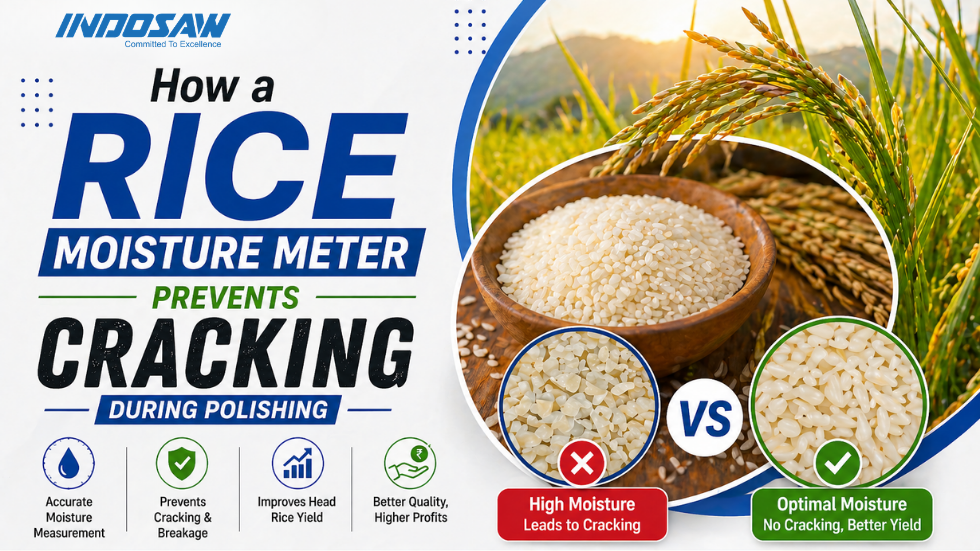
How a Rice Moisture Meter Prevents Cracking During Polishing
Rice Moisture Meter The journey from a golden paddy field to a polished bag of white rice is a delicate one. For those in the rice milling industry, the ultimate goal is simple yet challenging: achieving the highest possible yield of “head rice”—those full, unbroken grains that command the best market price.
However, one of the greatest hurdles in this process is the risk of grain cracking during the polishing stage. When rice breaks, it loses value and quality. Preventing this often comes down to a single, critical factor: moisture control. This is where a Rice Moisture Meter becomes an indispensable partner in the milling process.
The Science of the Grain
To understand how cracking happens, we have to look at the anatomy of a rice grain. Each grain is a biological entity that reacts to its environment. When rice is too dry, it becomes brittle and glass-like. When it is too wet, it is soft and susceptible to bruising.
During polishing, the outer bran layers are mechanically removed. This process generates friction and heat. If the internal moisture of the rice isn’t balanced, the heat causes the grain to expand and contract unevenly. This internal stress creates microscopic fractures. By the time the grain exits the polisher, those tiny fractures turn into full breaks.
Precision Over Intuition
In the past, many millers relied on experience or “feel” to judge if a batch was ready for the next stage. While traditional wisdom is valuable, it lacks the precision required for modern industrial standards. A Rice Moisture Meter removes the guesswork.
By providing an accurate digital reading of the moisture content, millers can ensure the grain is at the “sweet spot”—typically between 12% and 14% for most varieties. At this level, the grain possesses enough structural integrity to withstand the physical pressure of the polishing rollers without being so hard that it snaps.
Consistency Leads to Quality
Consistency is the hallmark of a premium brand. If one batch of rice is polished at 11% moisture and the next at 15%, the final product will be a mix of broken bits and unevenly polished grains.Rice Moisture Meter .
Using a moisture meter throughout the day allows for real-time adjustments. If the meter shows the moisture is dropping due to ambient heat in the facility, the miller can adjust the drying or tempering process accordingly. This proactive approach ensures that every bag of rice leaving the mill meets the same high standard of “head rice” percentage.
Efficiency and Sustainability
Beyond just preventing breakage, monitoring moisture is an exercise in efficiency. Over-drying rice is a waste of energy and literally reduces the weight of the product you have to sell. Conversely, under-drying risks fungal growth and spoilage.
When you use a reliable meter, Rice Moisture Meter you are optimizing your energy usage and protecting your inventory. It is a calm, methodical way to ensure that the hard work of the farmers and the machinery is not wasted at the final hurdle.
Conclusion
The art of rice milling is a balance of traditional knowledge and modern precision. Protecting the integrity of the grain during polishing isn’t about luck; it’s about understanding the environment inside the machine. By integrating a Rice Moisture Meter into your daily workflow, you provide your mill with the data needed to produce beautiful, whole, and high-quality rice every time. It is a small investment that pays dividends in the form of reduced waste and a superior final product.
To explore professional-grade testing solutions that bring accuracy and ease to your milling process, visit us at https://indosawagri.com/ . We are here to help you achieve the perfect polish with intelligence and care.