
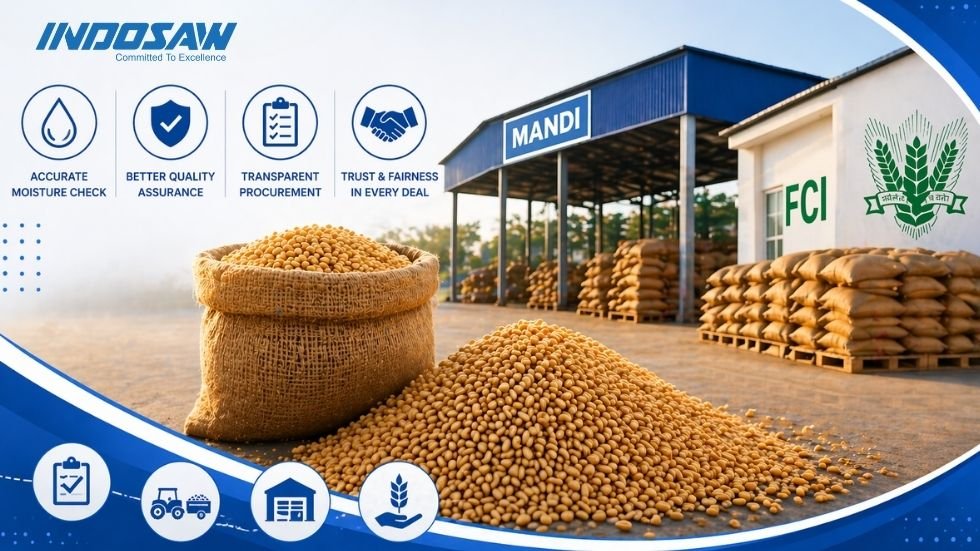
How Crop Moisture Testers Help FCI & Mandi Procurement Centers
Crop Moisture Tester The journey of a single grain from a farmer’s field to a consumer’s plate is one of precision, timing, and careful preservation. In India, the backbone of this journey lies within the Agricultural Produce Market Committees (Mandis) and the Food Corporation of India (FCI) procurement centers. As harvest seasons peak, these hubs become the frontline of national food security. However, the biggest challenge they face isn’t just volume—it’s moisture.
Maintaining the quality of procured grains is a delicate science. This is where the integration of modern technology, specifically specialized testing equipment, becomes a quiet hero in the procurement process.
The Critical Role of Moisture in Procurement Crop Moisture Tester
When farmers bring their produce to the Mandi, the primary concern for procurement officers is the moisture content of the crop. Grain that is too damp is prone to fungal growth, heating, and rapid infestation by insects. Conversely, if the moisture is too low, the grain becomes brittle and loses its nutritional and commercial value.
For the FCI, which manages the world’s largest food supply chain, even a 1% deviation in moisture levels can lead to massive losses during long-term storage in silos or warehouses. Traditionally, moisture was often judged by “feel” or manual methods, which left significant room for human error and disputes between farmers and procurement agents.
Precision and Fairness in the Mandi
The introduction of digital testing tools has brought a much-needed sense of calm and transparency to the bustling Mandi environment. When a lot of wheat, paddy, or maize is tested using high-precision equipment, the results are instantaneous and objective.
Using Crop Moisture Testers ensures that the farmer receives a fair price based on the actual quality of their harvest. It removes the guesswork from the equation. When a procurement officer can show a digital reading to a farmer, it builds a bridge of trust. The farmer understands exactly why their crop is graded a certain way, and the Mandi ensures it only accepts produce that is fit for storage.
Streamlining the FCI Supply Chain Crop Moisture Tester
Once the grain moves from the Mandi to FCI godowns, the stakes get even higher. The FCI must ensure that the grain remains viable for months, or even years, as part of the buffer stock.
- Prevention of Spoilage: Moisture testers allow for rapid screening at the gate. Any batch that exceeds the permissible limit (usually around 12% to 14% for most cereals) can be diverted for immediate drying rather than being mixed with dry stock, which would risk “hot spots” in the warehouse.
- Standardization: With consistent testing, the FCI can maintain a standardized database of grain health across different regions. This data helps in planning the “First-In, First-Out” (FIFO) logic for distribution.
- Economic Efficiency: By reducing “storage gain” or “storage loss” issues—where weight fluctuates due to moisture evaporation or absorption—the government can more accurately track the value of the national stock.
A Sustainable Future for Indian Agriculture
As we move toward a more tech-enabled agricultural sector, the focus is shifting from “quantity” to “quality.” Modern testing solutions are designed to be rugged enough for the dusty, high-heat environment of an Indian Mandi while remaining sophisticated enough to provide laboratory-grade accuracy.
By empowering procurement centers with these tools, we aren’t just protecting grain; we are protecting the livelihoods of millions of farmers and ensuring that the food reaching the most vulnerable sections of society is safe, nutritious, and of the highest quality.
Conclusion
The efficiency of our procurement system is the foundation of India’s food stability. Through the consistent use of Crop Moisture Testers, the FCI and Mandis can minimize post-harvest losses and ensure a transparent, scientific approach to grain handling. Investing in accuracy today means a more secure and waste-free tomorrow for the entire agricultural ecosystem.
For more information on high-quality agricultural testing equipment and to explore our range of solutions, please visit our website.
Learn more at: https://indosawagri.com/